✉ info@greenfibre.in | ☎ +91 XXXXX XXXXX | GRS Certified — Serving India & Global Markets
India's Trusted RPSF Supplier

Recycled Polyester Staple Fibre from PET Bottles to Textiles

We transform discarded PET drinking water bottles into premium recycled polyester staple fibre (RPSF) — delivering sustainable, GRS-certified fibre solutions for the global textile industry.

5M+
Bottles Recycled Monthly
60%
Less CO₂ Emissions
GRS
Certified Fibre
50+
Countries Served
ABOUT RPSF

Why Recycled Polyester Staple Fibre Is the Future of Textiles

Recycled Polyester Staple Fibre (RPSF) is a sustainable textile raw material produced by recycling post-consumer PET (polyethylene terephthalate) bottles — especially drinking water and beverage bottles — into high-quality staple fibre.

RPSF exhibits the same mechanical properties as virgin polyester — including tensile strength, elasticity, and durability — while dramatically reducing environmental impact. It is the cornerstone of the circular textile economy.

With global regulations like India's EPR framework and the EU's Packaging and Packaging Waste Regulation mandating recycled content, RPSF has moved from niche to necessity.
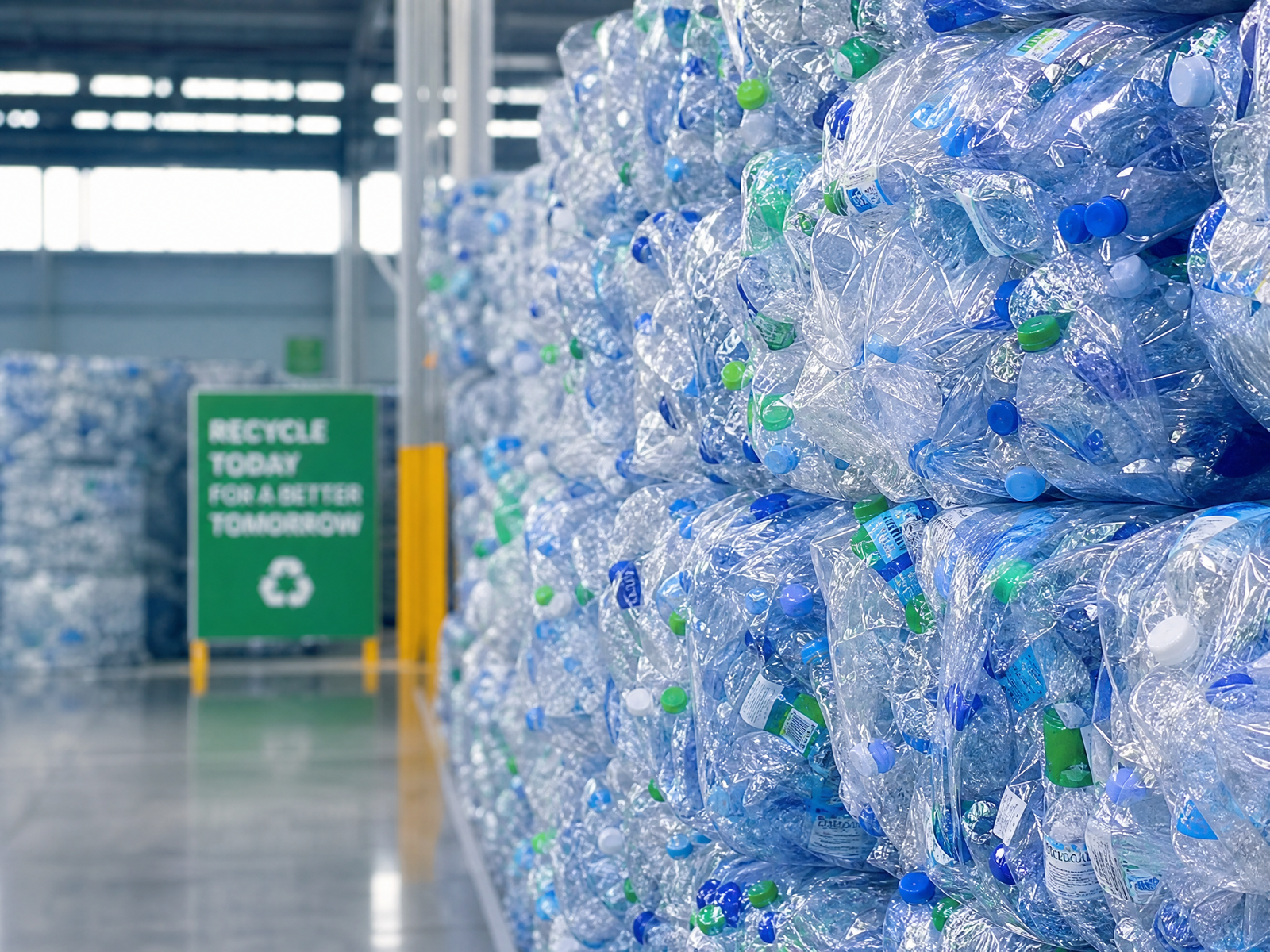
Recycled PET bottles collected for RPSF production at GreenFibre facility
🌱

Eco-Friendly Production

RPSF generates 60% fewer CO₂ emissions and uses 59% less energy compared to virgin polyester production. Zero new petroleum extraction required.

💪

Equal Performance

RPSF matches virgin polyester in tensile strength, durability, and dyeability. It blends seamlessly with cotton, viscose, and wool for premium fabric production.

💰

Cost-Effective

Recycled PET feedstock costs less than virgin PET resin. Lower energy consumption translates to competitive pricing without compromising quality.

🌎

Globally Compliant

GRS certified, EPR compliant, and meeting international textile standards. Trusted by brands and manufacturers across 50+ countries worldwide.
OUR PRODUCTS

Complete Range of RPSF Fibre Variants

We manufacture every type of recycled polyester staple fibre to meet your exact spinning, weaving, or nonwoven requirements.

Solid Fibre

Standard recycled polyester staple fibre for spinning yarns, woven fabrics, and general textile applications.

Denier: 1.2D – 6.0D | Cut: 32mm – 44mm

Hollow Fibre

Hollow-channel structure provides superior loft, bulk, and thermal insulation for pillows, cushions, and mattresses.

Denier: 3.0D – 15.0D | Cut: 32mm – 64mm

Siliconized Fibre

Treated with silicone for enhanced softness, smoothness, and anti-static properties. Ideal for premium home textiles.

Denier: 1.5D – 6.0D | Cut: 32mm – 38mm
🎨

Coloured Fibre

Solution-dyed RPSF available in a wide range of colours. Eliminates the need for post-production dyeing, saving water and energy.

Denier: 1.5D – 6.0D | Custom colours
APPLICATIONS

RPSF Across Every Industry

From fashion to automotive, recycled polyester staple fibre is the versatile raw material powering sustainable manufacturing worldwide.

Textiles & Apparel
Home Furnishings
Automotive
Industrial & Nonwovens
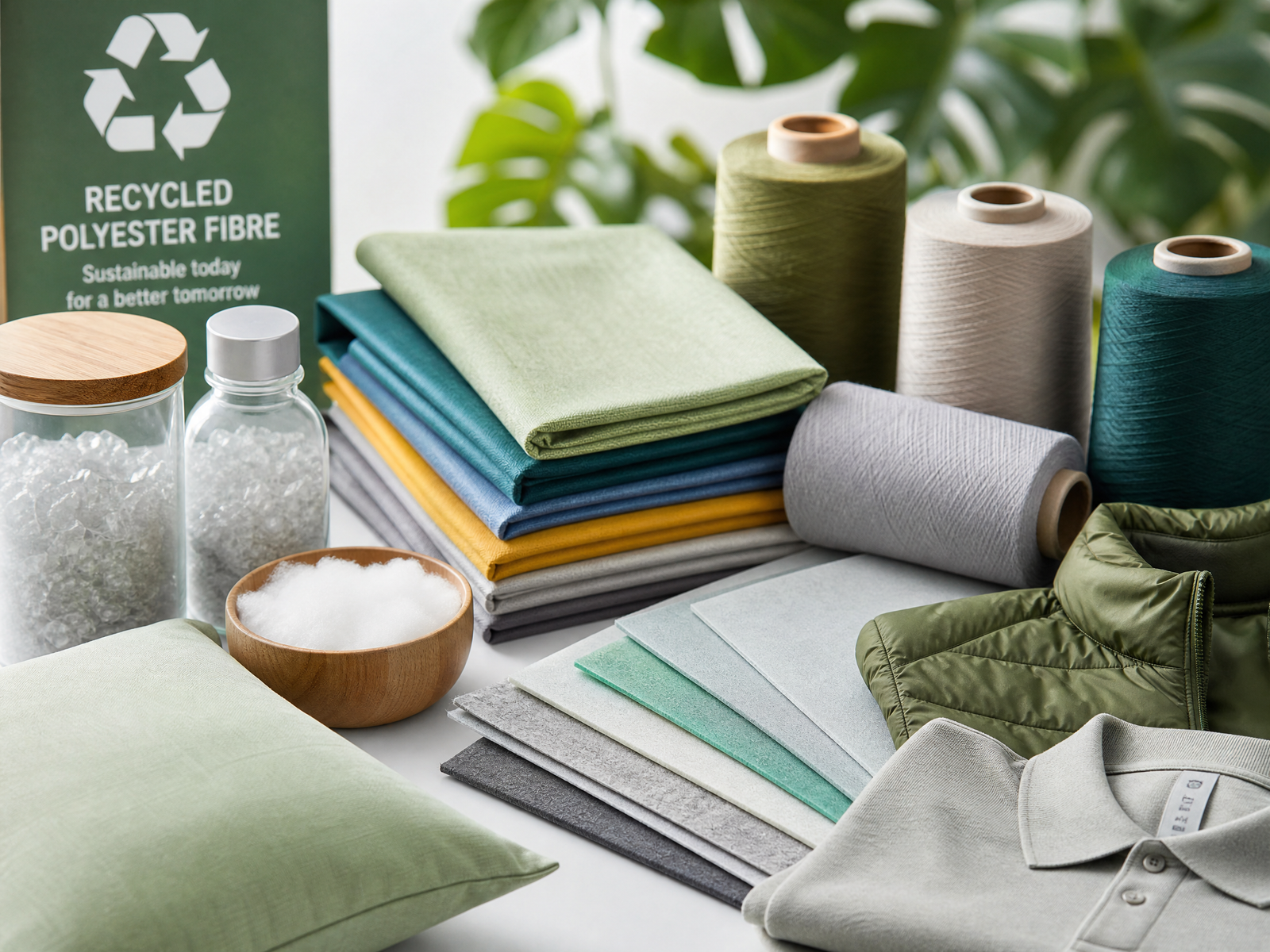
Textile fabrics and yarns made from recycled polyester staple fibre RPSF

Textiles & Apparel

RPSF is the foundational raw material for spun yarn production, enabling the creation of sustainable garments, fabrics, and fashion textiles without compromising on quality or feel.

  • Yarn spinning — ring, open-end, and rotor spinning
  • Blended fabrics with cotton, viscose, and wool
  • Woven and knitted garment production
  • Sportswear and activewear fabrics
  • Upholstery and industrial fabrics
Home furnishing products made from recycled polyester fibre — pillows, cushions, carpets

Home Furnishings

The softness, resilience, and loft properties of RPSF make it the ideal filling and fabric material for home textile products that people use every day.

  • Pillows, cushions, and mattress filling
  • Quilts, duvets, and comforters
  • Carpets and rugs — face fibre and backing
  • Curtains and drapery fabrics
  • Blankets and throws
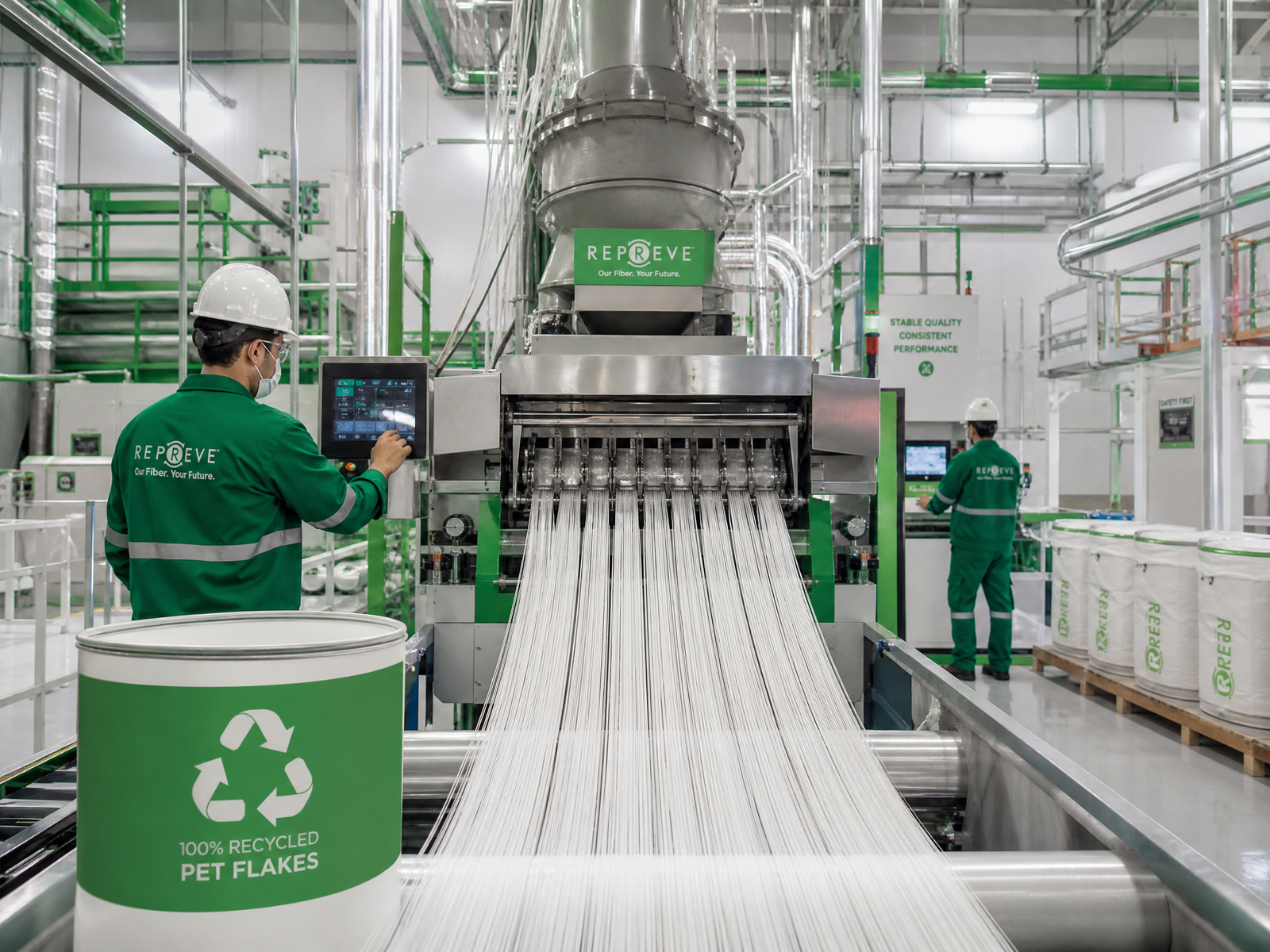
Industrial manufacturing facility for recycled polyester fibre

Automotive Interiors

Automotive manufacturers increasingly use RPSF for interior components, balancing performance with sustainability targets and weight reduction goals.

  • Car seat upholstery and padding
  • Sound insulation and acoustic panels
  • Floor mats and trunk liners
  • Headliners and door panel filling
  • Roof lining materials
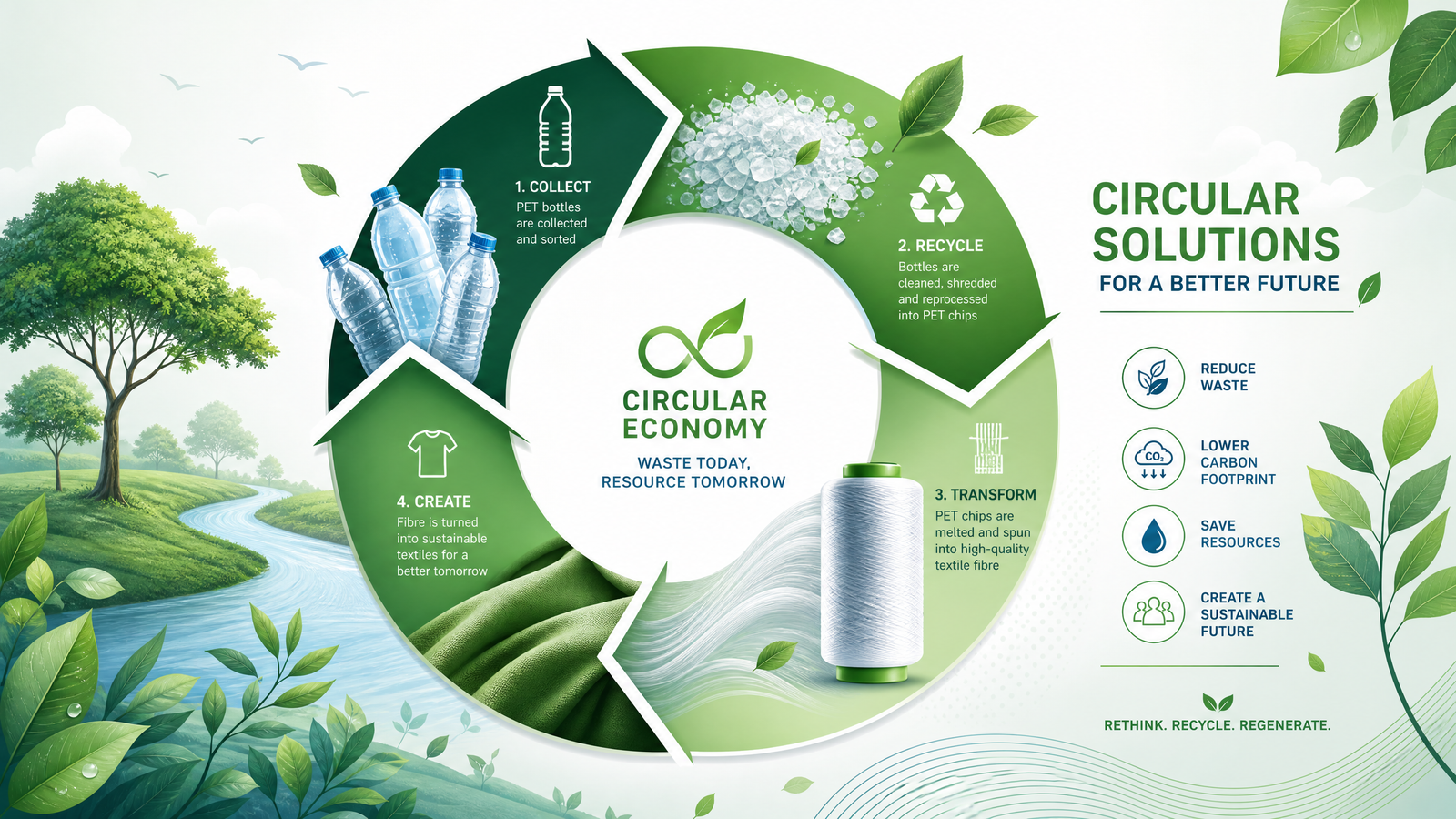
Sustainability and circular economy — PET bottles to recycled fibre

Industrial & Nonwovens

RPSF's versatility extends to industrial applications where strength, filtration efficiency, and environmental compliance are critical requirements.

  • Nonwoven fabrics — spunlace, needle-punch, thermo-bond
  • Hygiene products — wipes, diapers, medical supplies
  • Air and liquid filtration systems
  • Geotextiles — soil stabilization, erosion control
  • Industrial ropes, belts, and packaging
Circular economy — PET bottles recycled into sustainable textile fibre
SUSTAINABILITY IMPACT

Turning Waste Into Premium Fibre

Every kilogram of GreenFibre RPSF diverts approximately 60 PET bottles from landfills and oceans. Our manufacturing process conserves water, reduces energy consumption, and slashes greenhouse gas emissions — all while producing fibre that performs identically to virgin polyester.

The global recycled polyester market is projected to reach USD 26.18 billion by 2030, growing at a CAGR of 9.25%. India's EPR regulations and global brand commitments are accelerating this transition.

59%
Less Energy vs Virgin
60%
Lower CO₂ Emissions
90%
Water Saved
60
Bottles Saved per KG
MANUFACTURING PROCESS

From PET Bottle to Premium Fibre

Our state-of-the-art facility transforms collected PET bottles into high-quality RPSF through a controlled, multi-stage recycling process.

1

Collection & Sorting

PET bottles sourced from recycling networks, sorted by type and colour to ensure feedstock purity.

2

Washing & Cleaning

Bottles are thoroughly washed to remove labels, caps, adhesives, and contaminants using hot and cold wash systems.

3

Flake Production

Clean bottles are shredded into uniform PET flakes, the primary raw material for fibre extrusion.

4

Extrusion & Spinning

PET flakes are melted, filtered, and extruded through spinnerets into continuous filaments with precise denier control.

5

Cutting & Baling

Filaments are stretched, crimped, and cut into staple lengths (32–64mm), then baled for dispatch to textile mills worldwide.

WHY RPSF WINS

RPSF vs. Virgin Polyester — The Clear Choice

See why leading textile brands and manufacturers are switching to recycled polyester staple fibre.

Feature RPSF (Recycled PET Fibre) Virgin Polyester Fibre
Carbon Footprint 60% lower CO₂ emissions High — petroleum-based
Energy Consumption 59% less energy required Energy-intensive production
Water Usage 90% water reduction High water consumption
Raw Material Source Post-consumer PET bottles Crude oil / petroleum
Tensile Strength Equivalent to virgin Standard polyester strength
Dyeability Full colour range available Full colour range
Cost per KG Competitive — often lower Subject to oil price volatility
Regulatory Compliance EPR, GRS, EU compliant Increasingly restricted
Waste Diversion 60 bottles per kg diverted Adds to plastic waste
CERTIFICATIONS

Globally Certified & Trusted

Our RPSF meets the highest international standards for recycled content, quality, and environmental compliance.

🌎

GRS Certified

Global Recycled Standard certification ensures full traceability from bottle collection through to finished fibre.

📄

EPR Compliant

Fully aligned with India's Extended Producer Responsibility framework for plastic waste management.

ISO 9001:2015

Quality management system certified for consistent fibre production and customer satisfaction.

🌏

OEKO-TEX Standard

Tested for harmful substances, ensuring our fibre is safe for all textile and consumer applications.

Ready to Switch to Sustainable Fibre?

Join 500+ textile manufacturers worldwide who trust GreenFibre for their RPSF supply. Get a custom quote within 24 hours.

Get Your Free Quote Today →

Get in Touch

Whether you need a small order for sampling or bulk industrial supply, we have the RPSF grade, denier, and packaging to meet your requirements. Reach out today for a customized solution.

Email

info@greenfibre.in

Phone

+91 XXXXX XXXXX

📍

Headquarters

Your City, State, India

🕐

Business Hours

Mon – Sat: 9:00 AM – 6:00 PM IST

FAQ

Frequently Asked Questions About RPSF

Find answers to common questions about recycled polyester staple fibre, sourcing, and sustainability.

What is Recycled Polyester Staple Fibre (RPSF)?
+

RPSF is a sustainable textile fibre produced by recycling post-consumer PET bottles — especially drinking water bottles — into staple-length polyester fibre. The process involves collecting, washing, shredding PET bottles into flakes, melting and extruding them into filaments, and cutting the filaments into short staple lengths (typically 32–64mm). RPSF generates approximately 60% fewer CO₂ emissions compared to virgin polyester production.

What are the main applications of RPSF in textiles?
+

RPSF is widely used in yarn spinning for woven and knitted fabrics, nonwoven production (spunlace, needle-punch, thermo-bond), home furnishings (pillows, cushions, mattresses, carpets), automotive interiors (seat upholstery, sound insulation), and industrial applications (filters, geotextiles, ropes). It can be blended with cotton, viscose, and wool for enhanced fabric properties.

How does recycled polyester fibre compare to virgin polyester?
+

Recycled polyester fibre offers equivalent tensile strength, durability, and dyeability compared to virgin polyester. Environmentally, RPSF uses 59% less energy, reduces water consumption by 90%, and lowers CO₂ emissions by up to 60%. One kilogram of RPSF saves approximately 60 PET bottles from landfills and oceans. Cost-wise, RPSF is often more competitive than virgin polyester due to lower raw material costs.

What GRS certification means for RPSF buyers?
+

The Global Recycled Standard (GRS) certification provides full supply chain traceability — from PET bottle collection through sorting, washing, extrusion, and final fibre production. For buyers, GRS certification ensures that the recycled content claim is verified and auditable, which is essential for meeting brand sustainability requirements and regulatory compliance.

What denier and cut length options are available?
+

We offer RPSF in denier range from 1.2D (fine spinning) to 15.0D (insulation/stuffing). Common cut lengths include 32mm, 38mm, 44mm, 51mm, and 64mm. We also provide both solid and hollow fibre variants, siliconized and non-siliconized options, and a wide range of solution-dyed colours. Custom specifications can be produced based on your spinning or end-use requirements.

Do you export RPSF internationally?
+

Yes, we export GRS-certified RPSF to over 50 countries worldwide. We handle all export documentation, customs compliance, and international shipping logistics. Our fibre is packed in standard export-quality bales (300–350 kg) and containers can be loaded as per your volume requirements. We serve textile mills, nonwoven manufacturers, and automotive suppliers globally.